


Alkaline vs Lithium Batteries Which Is Best for Daily Use
When you compare alkaline vs lithium batteries for daily use, you see that lithium batteries typically deliver better performance and a longer lifespan, especially in high-drain devices. You might find alkaline batteries more affordable upfront, but they require more frequent replacement. Here’s a quick look at cost and use cases:
|
Battery Type |
Initial Cost |
Lifespan |
Best Use Case |
|---|---|---|---|
|
Alkaline |
Lower |
Shorter |
Remote controls, wall clocks |
|
Lithium |
Higher |
Longer |
Digital cameras, advanced tools |
You should consider sustainability and innovation as well, since modern lithium batteries offer eco-friendly solutions for your everyday needs.
Key Takeaways
-
Lithium batteries outperform alkaline batteries in high-drain devices, providing longer life and consistent power.
-
Alkaline batteries are cost-effective for low-drain devices, but they require frequent replacements, increasing long-term costs.
-
Choosing lithium batteries supports sustainability, as they have advanced recycling options and lower environmental impact.
-
For everyday use, match the battery type to your device's needs: use alkaline for low-drain and lithium for high-drain applications.
-
Investing in rechargeable lithium batteries can save money over time and reduce waste compared to single-use alkaline batteries.
Quick Comparison
When you compare alkaline vs lithium batteries, you notice clear differences in how they perform, how long they last, and their impact on the environment. The table below gives you a quick snapshot of the most important features:
|
Feature |
Alkaline Batteries |
Lithium Batteries |
|---|---|---|
|
Initial Cost |
Lower |
Higher |
|
Lifespan |
Shorter |
Longer |
|
Voltage per Cell |
3.7 volts (Li-ion) |
|
|
Average Capacity |
Lower (mAh) |
Higher (mAh) |
|
Self-Discharge |
Higher |
Lower |
|
Environmental Impact |
Landfill waste, less recycling |
Advanced recycling, lower waste with LiFePO4 |
|
Best Use Case |
Low-drain devices |
High-drain and advanced devices |
💡 Tip: Lithium batteries, especially those using LiFePO4 technology like JM battery, offer a longer lifespan and better performance for demanding devices. You also benefit from their lower self-discharge rate, which means your devices stay powered longer between uses.
Key Differences
You see several key differences when you look at alkaline vs lithium batteries side by side:
-
Performance: Lithium batteries deliver higher voltage and capacity. You get more consistent power, especially in high-drain devices.
-
Manufacturing: Alkaline batteries use standard production methods and require less capital investment. Lithium batteries need specialized equipment, advanced robotics, and more complex maintenance.
-
Environmental Impact: Alkaline batteries contribute to landfill waste if not recycled. Lithium batteries, particularly those from brands like JM battery, use safer materials and advanced recycling processes. LiFePO4 technology avoids rare or toxic metals, supporting sustainability.
-
Innovation: JM battery leads with innovative lithium solutions. You benefit from their focus on safety, efficiency, and eco-friendly design.
When you choose between alkaline vs lithium batteries, consider your device’s needs, your budget, and your commitment to sustainability. Lithium batteries, especially those using LiFePO4 technology, stand out for their long-term value and environmental responsibility.
Alkaline Batteries Explained
What Are Alkaline Batteries?
You use alkaline batteries every day in many household devices. These batteries rely on a simple chemical process to generate power.
-
The main active materials are zinc metal and manganese dioxide.
-
The electrolyte inside is potassium hydroxide, which gives the battery its alkaline name.
-
When you insert an alkaline battery into a device, zinc oxidizes and manganese dioxide reduces, creating a flow of electricity.
This design makes alkaline batteries reliable and easy to use for most basic electronics.
Pros of Alkaline Batteries
You benefit from several advantages when you choose alkaline batteries:
-
Low initial cost makes them budget-friendly for everyday needs.
-
Wide availability means you can find them almost anywhere.
-
Long shelf life allows you to store them for up to 10 years if you keep them in a cool, dry place.
-
No need for charging or maintenance, so you can use them right out of the package.
💡 Tip: Alkaline batteries work best when you need a quick, affordable solution for low-drain devices.
Cons of Alkaline Batteries
Despite their popularity, alkaline batteries have some limitations:
-
They lose capacity quickly in high-drain devices.
-
Overheating can occur if you overload or short-circuit them.
-
Voltage drops may cause your device to malfunction.
-
Leakage or outgassing can happen if you push them beyond their limits.
When you compare alkaline vs lithium batteries, you notice that alkaline batteries do not perform as well in demanding electronics.
Best Uses
Alkaline batteries shine in low-drain, everyday devices. Here are some common applications:
|
Application |
Description |
Recommended Type |
|---|---|---|
|
Emergency or weather radios |
Depend on batteries for operation during outages or severe weather. |
AA alkaline |
|
Home medical devices |
Require stable power for accurate health readings. |
AAA or AA alkaline |
|
Wireless doorbells and alarms |
Need consistent power for timely alerts. |
AA or AAA alkaline |
|
Headlamps and portable lanterns |
Used for reliable lighting during outdoor activities. |
AAA or AA alkaline |
|
Wireless game controllers |
Demand fast, reliable power for gameplay. |
2 AA alkaline |
|
Battery-powered electric screwdrivers |
Used for tightening or loosening screws with reliable power. |
2–4 AA alkaline |
|
Flashlights and emergency kits |
Require reliable power for immediate lighting in emergencies. |
AA alkaline |
You get the most value from alkaline batteries when you use them in devices that do not require a lot of power over a short period.
Lithium Batteries & JM Battery
What Are Lithium Batteries?
You encounter lithium batteries in many modern devices, from smartphones to electric vehicles. These batteries use lithium compounds as the main component in their electrochemistry. Lithium batteries stand out because they deliver higher energy density compared to traditional battery types.
Energy density measures how much energy a battery stores relative to its weight. Lithium batteries generally offer higher energy density, making them lighter and more powerful for their size.
You find several types of lithium batteries, including Lithium Cobalt Oxide (LCO), Lithium Nickel Manganese Cobalt (NMC), and Lithium Iron Phosphate (LiFePO4). Each type serves different needs, but all provide significant advantages over older chemistries.
JM Battery’s LiFePO4 Technology
JM Battery leads the way in advanced lithium-ion solutions, focusing on LiFePO4 technology. This chemistry offers exceptional safety, long lifespan, and environmental responsibility.
Here’s how JM Battery’s LiFePO4 technology compares to standard lithium-ion batteries:
|
Feature |
JM Battery’s LiFePO4 Technology |
Standard Lithium-Ion Batteries |
|---|---|---|
|
Thermal Stability |
Exceptional thermal stability; resists combustion |
Risk of overheating |
|
Battery Management System (BMS) |
Intelligent BMS with real-time monitoring |
Often lacks advanced monitoring |
|
Component Quality |
100% Grade A components with global safety certifications |
Varies in quality and certification |
You benefit from intelligent safety features and robust construction, making JM Battery a reliable choice for demanding applications.
Advantages of Lithium Batteries
Lithium batteries deliver several key benefits:
-
High energy density means you get more power in a lighter package.
-
Long lifespan reduces the need for frequent replacements.
-
Advanced safety features protect your devices and your investment.
JM Battery’s LiFePO4 products last 5–15 years with 6,000–8,000+ charge cycles, far outpacing generic cobalt-based lithium-ion batteries.
You also support the environment by choosing LiFePO4 batteries, which contain no toxic heavy metals and use abundant, non-toxic materials. Their recycling process is safer and their carbon footprint is lower than other lithium chemistries.
Ideal Applications
You can use lithium batteries in a wide range of scenarios. JM Battery’s products excel in home solar energy storage, backup power, and portable devices.
The JM Battery, powered by LiFePO4, demonstrates what advanced lithium technology can achieve. It offers a capacity of 1240Wh, Equipped with a 20kVA inverter, solar panel and a lifespan of 8000 cycles. You can power everything from refrigerators to power tools, making it ideal for both daily use and emergencies.
When you compare alkaline vs lithium batteries, lithium options like those from JM Battery provide superior performance, safety, and sustainability for your everyday needs.
Alkaline vs Lithium Batteries: Head-to-Head
Cost Comparison
When you compare the cost of alkaline vs lithium batteries, you notice a clear difference in the initial price. Alkaline batteries cost less upfront, making them a popular choice for everyday purchases. Lithium batteries, such as those from JM battery, require a higher initial investment. However, you should consider the long-term value. Lithium batteries last much longer and can be recharged many times, which reduces your total cost over time.
|
Battery Type |
Price Range (per cell) |
|---|---|
|
Lithium-ion |
$5 to $10 |
|
Alkaline |
$0.50 to $1 |
-
Lithium batteries are more expensive at first, but their longevity makes them more cost-effective for devices you use often.
-
Alkaline batteries are cheaper to buy, but you may need to replace them frequently in high-drain devices.
💡 Tip: If you use devices that require frequent battery changes, investing in lithium batteries can save you money in the long run.
Lifespan & Shelf Life
You get a much longer lifespan from lithium batteries compared to alkaline. In high-drain devices, lithium batteries maintain stable voltage and deliver consistent performance. Alkaline batteries, on the other hand, lose power quickly in demanding applications.
|
Battery Type |
Temperature Impact |
|
|---|---|---|
|
Alkaline batteries |
5-10 |
High heat accelerates degradation |
|
Lithium batteries |
10-15 |
High heat accelerates degradation |
Lithium batteries, like those from JM battery, can last for thousands of cycles and up to 15 years on the shelf. Alkaline batteries typically last up to 10 years if stored properly, but their performance drops faster in high-drain devices.
Performance in Devices
You will see the biggest difference between alkaline vs lithium batteries when you use them in high-drain electronics. Lithium batteries deliver higher voltage and maintain it throughout their discharge cycle. This means your devices run at full power for longer.
|
Battery Type |
Voltage (V) |
Discharge Rate |
Voltage Stability |
|---|---|---|---|
|
Alkaline |
1.5 |
Faster in low-drain devices |
Relatively stable over life cycle |
|
Lithium |
3.6 |
Slower in high-drain devices |
Maintains voltage consistently in high-drain applications |
-
Lithium batteries are ideal for high-drain devices like cameras, GPS units, and portable power stations.
-
They provide stable voltage, which ensures your electronics perform at their best.
-
Alkaline batteries work well in low-drain devices but require frequent replacement in demanding applications.
🔋 Note: The JM Battery, powered by advanced lithium technology, demonstrates how lithium batteries excel in both everyday and emergency scenarios.
Environmental Impact
You should consider the environmental impact when choosing between alkaline vs lithium batteries. Americans purchase billions of batteries each year, and many end up in landfills. When batteries corrode, they can release harmful chemicals into the environment.
-
Recycling batteries keeps them out of landfills and prevents soil and water contamination.
-
Lithium batteries, especially LiFePO4 types from JM battery, use safer materials and support advanced recycling processes.
-
Alkaline batteries contribute more to landfill waste due to their single-use nature.
🌱 Tip: By choosing rechargeable lithium batteries, you reduce waste and support a more sustainable future.
Device Compatibility
You need to match the right battery to your device. Alkaline batteries, especially AA and AAA sizes, fit most household electronics like remotes, clocks, and toys. Lithium batteries offer greater flexibility, especially in modern devices that require slim, lightweight, and rechargeable power sources.
-
Lithium polymer batteries adapt to many shapes and sizes, making them perfect for smartphones, wearables, and portable power stations.
-
Alkaline batteries remain the standard for many traditional devices.
-
Some older electronics may not work properly with lithium batteries due to voltage differences or battery indicator issues.
|
Issue |
Explanation |
|---|---|
|
Voltage Difference |
Lithium batteries have a higher nominal voltage (3.6V) compared to alkaline batteries (1.5V), which may cause incompatibility in devices designed for alkaline batteries. |
|
Discharge Characteristics |
Lithium batteries maintain a consistent voltage output, which can lead to inaccurate battery life readings in devices that rely on the gradual voltage drop of alkaline batteries. |
⚠️ Note: Always check your device’s specifications before switching from alkaline to lithium batteries to avoid compatibility issues.
Choosing the Right Battery

Everyday Devices
When you select batteries for everyday devices like remote controls and wall clocks, you want reliability and simplicity. Alkaline batteries remain the top choice for these low-drain electronics. They deliver steady power, have a long shelf life, and minimize the risk of leakage. For clocks, alkaline batteries outperform lithium or rechargeable options, which can sometimes cause malfunctions. You should also avoid off-brand batteries, as they may not provide consistent power.
|
Device Type |
Recommended Battery |
Why Choose It? |
|---|---|---|
|
Wall clocks |
Alkaline |
Stable voltage, long life, safe choice |
|
Remote controls |
Alkaline |
Cost-effective, reliable performance |
|
Small flashlights |
Alkaline |
Readily available, easy to replace |
High-Drain Electronics
For high-drain electronics such as digital cameras, portable gaming devices, and advanced flashlights, you need a battery that can keep up with demanding power requirements. Lithium batteries excel in these scenarios. They maintain a higher and more stable voltage, which means your devices run longer and perform better. Alkaline batteries may struggle under continuous heavy use, leading to frequent replacements and inconsistent performance.
-
Lithium batteries provide strong, reliable power for high-drain devices.
-
They deliver consistent voltage throughout their life, so your electronics work at peak efficiency.
-
Rechargeable lithium options, like those from JM battery, offer long operational life and reduce waste.
If you use devices that require frequent or extended use, lithium batteries or high-quality rechargeable options are your best bet.
Outdoor & Extreme Conditions
Outdoor adventures and extreme environments demand batteries that can withstand temperature fluctuations and deliver dependable power. Lithium batteries, especially those using LiFePO4 technology from JM battery, perform exceptionally well in cold or hot conditions. They have a low self-discharge rate, so they retain their charge even when stored for long periods.
-
Lithium batteries operate reliably in both freezing and high-heat environments.
-
They are ideal for outdoor gear, GPS units, and portable power stations.
-
You can trust lithium batteries to deliver power when you need it most, whether you are hiking, camping, or preparing for emergencies.
🚩 Note: For off-grid setups or backup power, consider JM battery’s LiFePO4 solutions for their safety, longevity, and environmental benefits.
Budget Considerations
Your budget plays a significant role in choosing between alkaline vs lithium batteries. Alkaline batteries cost less upfront, making them a practical choice for devices you use occasionally or for short periods. However, if you rely on high-drain electronics or need batteries for frequent use, investing in lithium batteries saves you money over time. Rechargeable lithium options, like those from JM battery, offer thousands of cycles, reducing the need for constant replacements.
-
Choose alkaline batteries for low-drain, infrequently used devices to keep costs down.
-
Opt for lithium or rechargeable lithium batteries for high-drain, daily-use electronics to maximize value and minimize waste.
-
Consider the long-term savings and environmental impact when making your decision.
🌱 Sustainability Tip: By selecting rechargeable lithium batteries, you support a greener future and reduce landfill waste.
You can confidently choose the right battery by considering your device type, usage patterns, and budget. For advanced needs and a commitment to sustainability, JM battery’s lithium solutions provide unmatched performance and peace of mind.
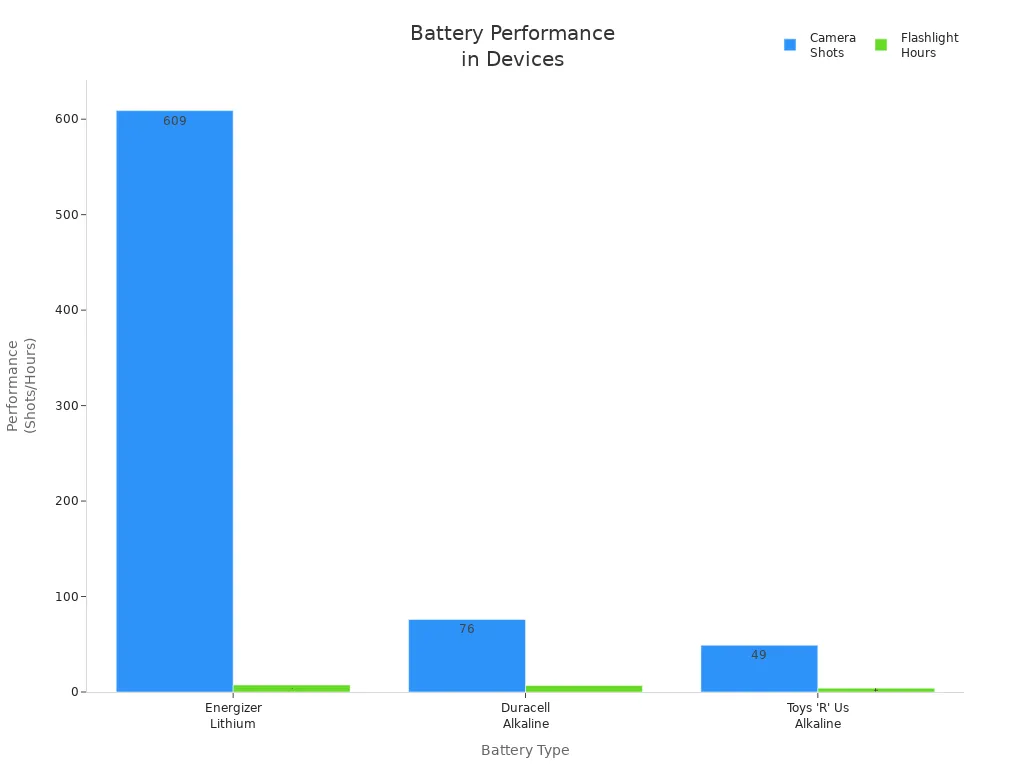
You see clear advantages when you choose lithium batteries for high-drain devices. Recent consumer reports show that Energizer Lithium batteries deliver 609 camera shots and 7.3 hours in flashlights, while Duracell Alkaline only manages 76 shots and 6.8 hours.
|
Battery Type |
Performance in Camera (Shots) |
Performance in Flashlight (Hours) |
|---|---|---|
|
Energizer Lithium |
609 |
7.3 |
|
Duracell Alkaline |
76 |
6.8 |
|
Toys 'R' Us Alkaline |
49 |
4 |
When you select batteries, consider these key points:
-
Lithium batteries last longer, reducing waste and replacement frequency.
-
Recycling options for lithium batteries are more advanced.
-
Alkaline batteries can leak chemicals, causing environmental harm.
You make the best choice by matching your battery to your device and valuing innovation and sustainability.
FAQ
What devices work best with alkaline batteries?
You should use alkaline batteries in low-drain devices. These include remote controls, wall clocks, and basic flashlights. Alkaline batteries provide reliable power for electronics that do not require frequent or heavy use.
Why choose lithium batteries for high-drain electronics?
You get consistent voltage and longer runtime with lithium batteries. Devices like digital cameras, GPS units, and portable power stations perform better with lithium technology. JM battery’s LiFePO4 products set the standard for demanding applications.
Are lithium batteries safe for home use?
You can trust lithium batteries, especially LiFePO4 types from JM battery, for home use. They feature advanced safety systems and thermal stability. These batteries resist overheating and provide reliable energy storage for solar systems and backup power.
How do lithium batteries support sustainability?
You support sustainability by choosing lithium batteries. JM battery’s LiFePO4 products use non-toxic materials and advanced recycling processes. These batteries last longer and reduce landfill waste compared to single-use alkaline batteries.
Can I replace alkaline batteries with lithium in any device?
You should check your device’s specifications before switching. Some electronics may not support the higher voltage of lithium batteries. Always confirm compatibility to ensure safe and optimal performance.


