


Lithium battery vs high capacity battery
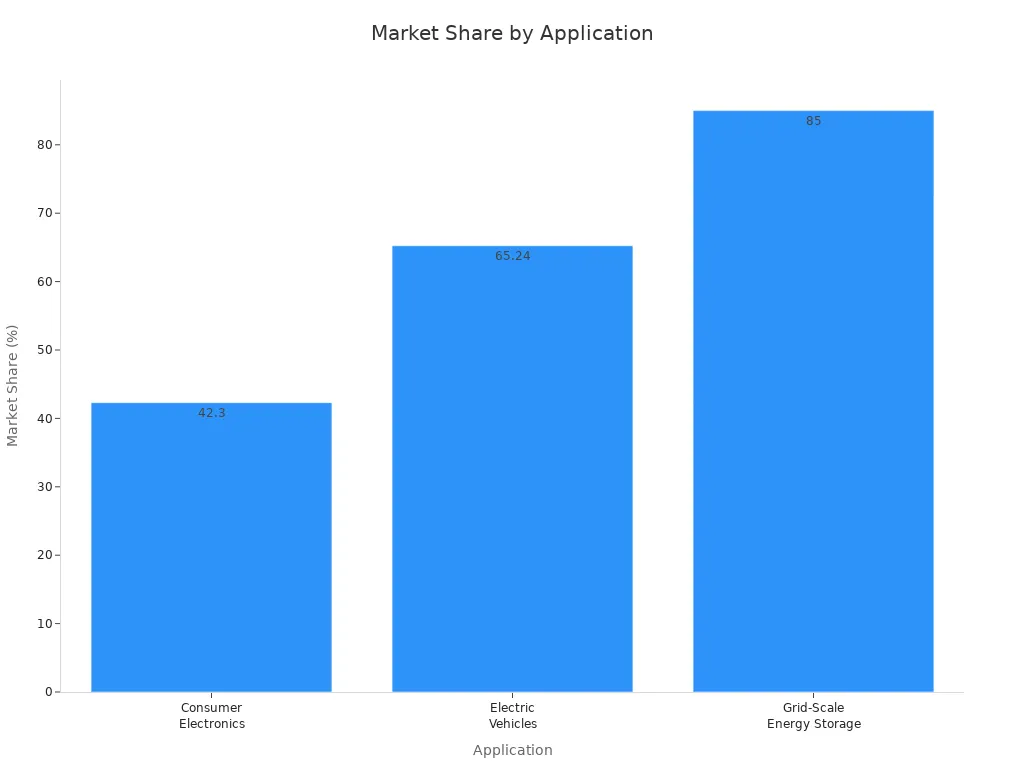
You often see the term lithium battery when shopping for devices or vehicles. The main difference comes down to chemistry and capacity. Lithium batteries dominate markets like electric vehicles and energy storage, as shown below:
|
Application |
Market Share (%) |
|---|---|
|
Consumer Electronics |
42.3 |
|
Electric Vehicles |
65.24 |
|
Grid-Scale Energy Storage |
85 |
Your choice depends on what matters most. If you want longer lifespan or lower cost, high capacity batteries with sulfur chemistry may appeal. If safety ranks highest, non-flammable options stand out. Each priority shapes your best option.
Key Takeaways
-
Lithium batteries are popular for their high energy density, making them ideal for portable devices like smartphones and electric vehicles.
-
High capacity batteries store more energy and are best for devices that require long runtimes, such as laptops and backup power systems.
-
Safety features in modern batteries, like Battery Management Systems, help prevent overheating and other hazards, ensuring safer usage.
-
Consider the total cost of ownership, including lifespan and maintenance, when choosing between lithium and high capacity batteries.
-
Match the battery type to your needs by prioritizing energy density, lifespan, and safety for the best performance.
Battery Types

What is a lithium battery?
You see lithium battery technology everywhere, from smartphones to electric cars. This battery type uses lithium ions to store and release energy. You benefit from high energy density, which means more power in a smaller package. Lithium batteries come in several types, each with unique strengths. For example, Li-Ion batteries power most portable electronics, while LiFePO4 batteries offer longer life and better safety for energy storage.
Note: Many people think lithium batteries are unsafe, but most risks come from misuse or poor design. Some lithium chemistries, like lithium iron phosphate, are very stable and reliable.
Here’s a quick comparison of common lithium battery types:
|
Type |
Voltage (V) |
Cycle Life |
Stability |
Best Use |
|---|---|---|---|---|
|
Li-Ion |
3.6 |
500-1,000 |
Moderate |
Phones, laptops |
|
LiFePO4 |
3.2 |
2,000+ |
High |
EVs, solar storage |
|
Lithium Polymer |
3.7 |
300-500 |
Moderate |
Drones, wearables |
What is a high capacity battery?
You want a battery that lasts longer and powers bigger devices. High capacity batteries store more energy than standard batteries. Manufacturers measure capacity in milliamp-hours (mAh). The higher the mAh, the longer your device runs. High capacity batteries work best for high-drain devices, such as laptops, electric vehicles, and backup power systems.
-
High capacity batteries deliver extended runtime.
-
They suit devices that need lots of power over time.
-
You find them in everything from medical equipment to power tools.
Overlap and distinctions
You may notice that some high capacity batteries use lithium chemistry, while others rely on different materials. The overlap can cause confusion. Not every lithium battery is high capacity, and not every high capacity battery uses lithium.
|
Feature |
Lithium-Ion (Li-Ion) |
Lithium Iron Phosphate (LiFePO4) |
|---|---|---|
|
Specific Energy |
High |
Lower |
|
Discharge Rate |
Lower |
Higher |
|
Cycle Life |
Shorter |
Longer |
|
Thermal Stability |
Lower |
Higher |
|
Application Suitability |
Portable devices |
EVs, medical instruments |
|
Material Safety |
Contains cobalt (toxic) |
Less toxic materials |
Many people believe all lithium batteries are the same, but design and chemistry make a big difference in safety and performance. Smart battery systems can monitor conditions and improve reliability.
You should choose based on your needs. If you want lightweight power for a phone, a lithium battery fits best. For backup power or electric vehicles, high capacity batteries—often lithium-based—offer longer life and better safety.
Lithium battery performance
Energy capacity
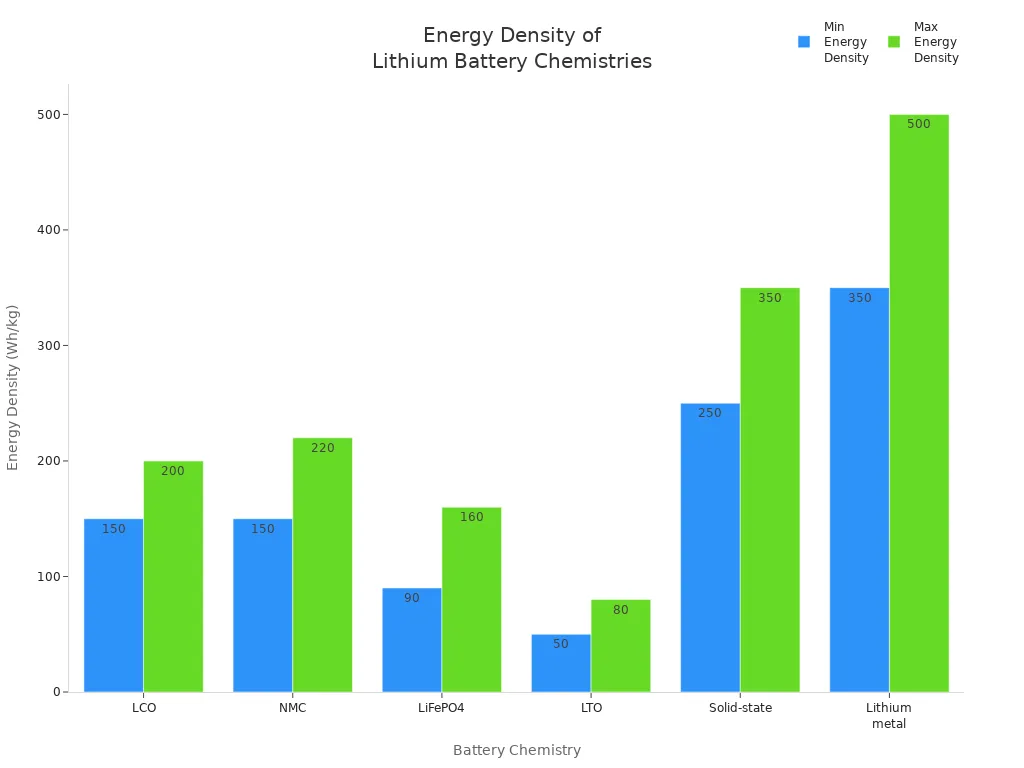
When you compare batteries, energy capacity tells you how much power you get for the size and weight. Lithium battery technology stands out for its high energy density. This means you can store more energy in a smaller, lighter package. For example, lithium cobalt oxide batteries offer energy densities between 150 and 200 Wh/kg, while lithium nickel manganese cobalt oxide batteries reach up to 220 Wh/kg. Solid-state batteries push these numbers even higher, with energy densities between 250 and 350 Wh/kg. In contrast, lithium iron phosphate batteries provide 90 to 160 Wh/kg, making them heavier for the same amount of stored energy.
|
Chemistry |
Energy Density (Wh/kg) |
|---|---|
|
Lithium Cobalt Oxide (LCO) |
150–200 |
|
Lithium Nickel Manganese Cobalt |
150–220 |
|
Lithium Iron Phosphate (LiFePO4) |
90–160 |
|
Lithium Titanate (LTO) |
50–80 |
|
Solid-state |
250–350 |
|
Lithium metal |
350–500 |
If you need a battery for a portable device or an electric vehicle, you benefit from the high energy density of lithium battery options. High capacity batteries that use other chemistries often weigh more and take up more space for the same energy storage.
Lifespan
You want your battery to last as long as possible. Lifespan depends on how many charge cycles a battery can handle before its capacity drops. Lithium polymer batteries typically last between 1,500 and 2,000 cycles. Lithium-ion batteries offer between 500 and 1,000 cycles. This means lithium polymer batteries give you a longer usable life. High capacity batteries with lithium iron phosphate chemistry can also reach up to 2,000 cycles, making them a strong choice for applications like solar storage and electric vehicles.
-
Lithium polymer batteries: 1,500–2,000 cycles
-
Lithium-ion batteries: 500–1,000 cycles
-
LiFePO4 batteries: up to 2,000 cycles
Longer lifespan reduces waste and replacement costs. You get more value over time, especially if you use your battery daily.
Charging speed
Charging speed affects how quickly you can use your device again. Fast charging gives you convenience, but it can shorten battery life. If you charge at high rates, you may see a drop in capacity retention. For example, charging at 4C can reduce capacity retention to 67.3% after just 10 cycles. Fast charging also generates more heat, which can damage the battery and cause venting or rapid gassing.
-
Fast charging: Shorter charge times, but faster degradation and heat buildup.
-
Slow charging: Gentler on the battery, with improved capacity retention and less degradation.
If you want your battery to last longer, you should use slow charging when possible. This approach helps maintain capacity and reduces the risk of damage.
Weight and size
Weight and size matter most for portable devices and vehicles. Lithium-ion batteries excel because they pack more energy into a compact, lightweight form. You get longer runtime without adding bulk. Lithium iron phosphate batteries, while safer and longer-lasting, have lower energy density. This means they are heavier and larger for the same energy storage.
Tip: Choose lithium-ion batteries for applications where minimizing weight and size is critical, such as smartphones, laptops, and electric cars. For stationary uses like backup power, you can select high capacity batteries with lower energy density.
You should consider the trade-offs. Higher capacity often means a heavier battery. Lower discharge rates and differences in internal resistance can affect performance. If you need lightweight power, lithium battery technology gives you the best balance of energy, size, and weight.
Safety
Safety features
You want your battery to keep you and your devices safe. Manufacturers design modern batteries with several safety features to protect you from accidents. Most lithium battery and high capacity battery systems include:
-
Battery Management System (BMS) that monitors performance and prevents overcharging, overheating, and short circuits.
-
Built-in fire extinguishers that activate during extreme overheating or failure.
-
Thermal regulation, such as heated cells, to prevent overheating or freezing.
-
Low voltage protection to stop deep discharge.
-
Low temperature charging cutoff to avoid charging in freezing conditions.
-
Jump-start on low voltage to revive batteries safely.
-
Overcurrent protection to prevent dangerous current spikes.
Regulatory standards also play a role. In the U.S., import laws require foreign suppliers to meet strict hazmat safety standards. The EU enforces regulations that cover all battery types, focusing on safety, substance restrictions, and testing. These rules help ensure batteries meet high safety expectations.
Risks and hazards
You should know the risks before choosing a battery. Lithium-ion batteries can release toxic gases and pollutants if damaged, which may harm air and water quality. Hydrogen fluoride is especially dangerous, even at low levels. Overcharging or overheating can cause fires or explosions. Volatile electrolytes inside the battery may release flammable gases. Ejection during an incident can spread fire or trigger secondary ignitions. Thermal runaway, a rapid increase in temperature, can lead to explosions. Firefighters often face chemical exposure and need special cooling methods to control battery fires.
Accidents can happen during transportation, storage, assembly, or disposal. Complex supply chains increase the risk of transportation-related incidents. Leakage, fire, and explosion are the main types of accidents you might encounter.
Reliability
You want a battery that works when you need it. Reliability depends on the type of battery and its design. Lithium-ion batteries have a higher failure rate and a 10% chance of ignition during accidents. Solid-state batteries show much lower failure rates and only a 1% chance of ignition. You get better reliability with solid-state technology, but most devices still use lithium-ion batteries because they offer a good balance of performance and cost.
|
Battery Type |
Failure Rate |
Ignition Probability in Accidents |
|---|---|---|
|
Lithium-Ion |
Higher |
10% |
|
Solid-State |
Lower (10x) |
1% |
Tip: Always follow manufacturer guidelines for charging and storage. Proper use helps reduce risks and improves reliability.
Cost
Initial cost
You may notice that lithium batteries often cost more upfront than other high capacity batteries. Manufacturers continue to lower prices as technology improves. The table below shows the average price per kilowatt-hour for lithium batteries over recent years:
|
Year |
Average Lithium Battery Price per kWh (USD) |
|---|---|
|
2023 |
$139 |
|
2024 |
$115 |
|
2025 |
Projected $100 or slightly below |
High capacity batteries using older chemistries, such as lead acid, usually cost less at first. However, you should consider more than just the purchase price. The total cost of ownership includes the initial cost, energy efficiency, and maintenance expenses.
Long-term value
You want your investment to last. Lithium batteries, especially lithium iron phosphate (LiFePO4), offer strong long-term value. These batteries cost more at first, but you save money over time because they last longer and need fewer replacements. Here are some key points:
-
LiFePO4 batteries provide extended cycle life and deeper discharge.
-
You spend less on maintenance and replacements.
-
Lithium batteries last 3–5 times longer than lead acid batteries.
-
They weigh 60% less and charge faster.
-
You get 80–100% usable capacity, while lead acid batteries offer only 50%.
Lithium-ion batteries may seem expensive, but their long-term benefits often justify the investment. You spend less on replacements and enjoy better performance for years.
Maintenance
You want a battery that is easy to care for. Lithium batteries require less maintenance than many high capacity alternatives. To keep your battery healthy, follow these tips:
-
Avoid deep discharge and overcharge; keep the charge between 20–80%.
-
Limit fast charging to slow down aging.
-
Monitor self-discharge and check the charge status regularly.
-
Store batteries away from direct sunlight.
-
Update battery management software when available.
-
Lithium-ion batteries usually last 2–3 years or 300–500 cycles.
-
Replace the battery if run time drops below 80% of original capacity.
-
Always follow charging instructions and storage recommendations.
You spend less time and money maintaining lithium batteries. Proper care helps you get the most value from your investment.
Use Cases
Electronics
You rely on portable electronics every day. Lithium-ion batteries power most smartphones, laptops, and tablets. Manufacturers choose these batteries because they offer high energy density and a lightweight design. You benefit from longer usage times and easy portability. The table below highlights why lithium-ion batteries dominate this market:
|
Feature |
Description |
|---|---|
|
High Energy Density |
Packs more power into a small space |
|
Lightweight Design |
Keeps devices easy to carry |
|
Customizable |
Fits many shapes and sizes, from drones to wearables |
|
Low Maintenance |
Requires little upkeep |
|
Rechargeable |
Lets you reuse the battery many times |
-
You get reliable performance with minimal maintenance.
-
You enjoy cost savings because these batteries recharge many times.
Electric vehicles
You want your electric vehicle to travel farther and last longer. Lithium-ion batteries, especially lithium-iron-phosphate (LFP), provide high energy density and long cycle life. You experience better handling and efficiency because these batteries reduce weight and volume. LFP batteries often reach up to 2,000 charge cycles, so you replace them less often.
-
High-energy-density batteries improve driving range.
-
LFP batteries offer better safety and longer lifespan.
-
You spend less on replacements over time.
Backup power
You need backup power for emergencies or off-grid living. Lithium batteries deliver fast charging, long lifespan, and low self-discharge rates. High capacity batteries, such as lead-acid or nickel-based types, cost less upfront but may require more maintenance. The table below compares key features:
|
Advantage/Disadvantage |
Lithium Batteries |
High Capacity Batteries |
|---|---|---|
|
Energy Density |
High |
Moderate to High |
|
Charging Speed |
Fast |
Moderate |
|
Lifespan |
Long |
Varies |
|
Self-Discharge Rate |
Low |
Moderate |
|
Initial Cost |
High |
Lower |
|
Safety Concerns |
Yes |
Varies |
|
Environmental Impact |
Significant |
Varies |
Tip: Choose lithium batteries for reliable, long-lasting backup power. Pick high capacity alternatives if you want lower upfront costs and can manage more frequent maintenance.
Other applications
You see new battery technologies in aerospace, grid storage, and advanced vehicles. Solid-state batteries and silicon anode designs offer higher energy density and improved safety. These options suit demanding environments where performance and reliability matter most.
-
Solid-state batteries work well in electric vehicles and aerospace.
-
Silicon anode technology boosts efficiency for grid energy storage.
You should match the battery type to your needs. Consider energy density, lifespan, safety, and cost before making your choice.
You have seen that lithium battery technology offers longer run times, faster charging, and extended service life. High capacity batteries may suit your needs if you want lower upfront costs or specific chemistries.
-
Advanced safety features and rigorous testing standards protect you and your devices.
-
Long-term value often outweighs initial cost for most users.
To choose the best battery:
-
Match the battery type to your application.
-
Prioritize safety and form factor.
-
Consider total cost of ownership.
FAQ
What makes lithium batteries different from high capacity batteries?
You find lithium batteries use lithium ions for energy storage. High capacity batteries focus on storing more energy, regardless of chemistry. Some high capacity batteries use lithium, while others use different materials.
Are lithium batteries safe to use every day?
You can use lithium batteries safely if you follow manufacturer instructions. Most devices include safety features. Avoid exposing batteries to extreme heat or physical damage.
How do I extend the life of my battery?
You should avoid deep discharges and overcharging. Keep your battery between 20% and 80% charged. Store it in a cool, dry place. Limit fast charging when possible.
Tip: Regularly check your battery’s health in device settings.
Which battery type is best for backup power at home?
You get the best long-term value and reliability from lithium iron phosphate (LiFePO4) batteries. These batteries last longer and require less maintenance than lead-acid or nickel-based options.


